Alkaline Protease for Wastewater Biofilm Treatment
Bulk alkaline protease for water-treatment product makers, cleaning-chemical formulators and plant operators who need to break down protein biofilm and fouling. Request a quote with your system type, volume and destination.
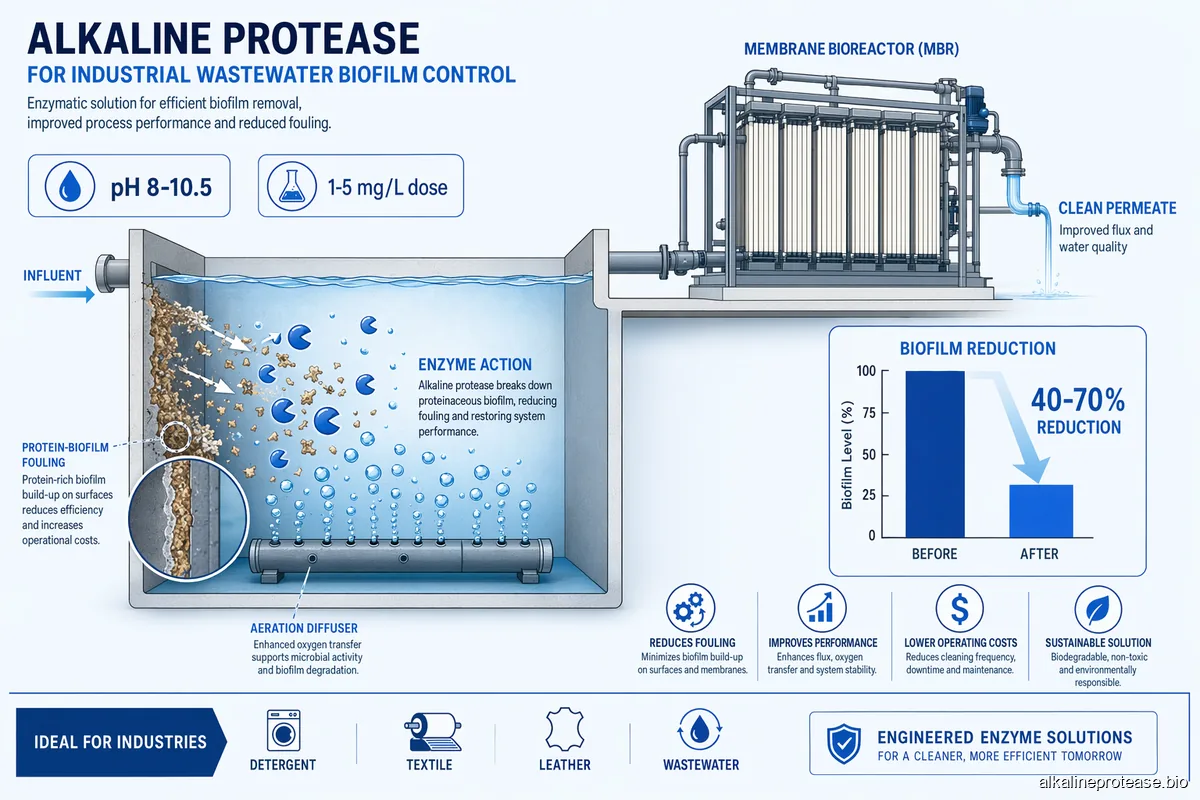
Protein-rich wastewater from food, dairy, meat, brewing and tannery plants leaves a sticky protein layer on pipes, aeration equipment and membranes. That layer costs money: more frequent chemical cleans, lost membrane flux, extra downtime and a heavier load on the biological stage. Alkaline protease is the enzyme that attacks the protein part of that layer. We supply it in bulk to the businesses that build and sell treatment products and to the plants that run them. To get a quote, email hello@mail.alkalineprotease.bio with your system type, the volume you need and the destination country.
How it works in practice: biofilm is a mix of microbes, polysaccharides and protein. The protease cuts the protein scaffold, so the film loosens and is carried away by flow, aeration or the next cleaning step. Because the enzyme works in alkaline conditions, it fits alongside the alkaline cleaning solutions most plants already use, and it is biodegradable, so it does not add a persistent residue to the effluent.
Where buyers use it: as an active in enzyme-based drain, pipe and biofilm products; as a pre-clean step in membrane cleaning programs, before the usual oxidising clean; and in equalisation tanks that receive high-protein streams such as tannery effluent. Most treatment-product makers combine protease with other enzymes for mixed soils, so tell us what else is in your formula.
What decides the right dose is your own system: the protein load, contact time, temperature and pH. We do not quote a single dose for every plant. We recommend a grade, send a sample with COA and TDS, and you confirm the dose in a bench or side-stream trial before scaling up.
Treatment-product makers and distributors
Companies that sell enzyme-based biofilm, drain and line-cleaning products buy alkaline protease as the protein-removing active. We quote bulk drums for blending and supply the COA and TDS your own customers ask for.
Membrane cleaning programs
Protein fouling is a common reason membrane flux drops in plants treating food and dairy effluent. An alkaline protease soak before the oxidising clean loosens the protein layer so the chemical clean can work on what is left. Confirm contact time and dose on one module before rolling it out.
Food, dairy and meat plant effluent
Protein residues build up on channels, weirs and aeration equipment. Dosing protease into the affected section helps break up the protein film, which can mean fewer manual cleans. Results depend on load and contact time, so start with a trial.
Tannery wastewater
Tannery effluent carries protein from soaking, liming and bating. Protease added in the equalisation stage starts breaking that protein down before the biological stage. Tanneries that already buy protease for bating can often use the same supply relationship.
| Parameter | Value |
| Activity range | 100,000 – 200,000 U/g |
| Optimal pH | 8.0 – 10.5 |
| Optimal temperature | 30°C – 55°C |
| Form | White to light tan powder |
| Shelf life | 12 months (sealed, cool, dry place) |
| Packaging | 25 kg drums / 25 kg jerricans |
Frequently Asked Questions
How does alkaline protease break down protein biofilm in wastewater systems?
Biofilm holds together with a protein scaffold inside a matrix of polysaccharides. Alkaline protease cuts the peptide bonds in that scaffold, so the film loses strength and is carried off by flow, aeration or the next cleaning step. It works best as part of a program with mechanical or chemical cleaning, not as the only measure.
Is alkaline protease safe for use in wastewater and environmental discharge?
Alkaline proteases are proteins themselves, so they are biodegradable and are broken down in biological treatment. They leave no persistent residue. Check local discharge rules for the full formula you use, not only the enzyme.
What dose should we use?
It depends on protein load, contact time, temperature and pH, so we do not publish one figure for every system. We recommend a grade from your description, send a sample, and you confirm the dose in a bench or side-stream trial before scaling.
Do you supply businesses that resell or blend treatment products?
Yes. We supply companies that formulate or distribute treatment and cleaning products as well as plant operators. Bulk supply is quoted per order; send the product, quantity and destination.
What documentation is available for wastewater and industrial cleaning applications?
We supply COA with protease activity, TDS, MSDS, and ISO 9001 certification. For wastewater applications, we can provide biodegradability data, pH stability profiles relevant to treatment system conditions, and application guidance for dosing calculations. Custom documentation packages for industrial water treatment compliance review are available upon request.
Request a Bulk Quote for Wastewater Protease
Tell us your system type (biological stage, membranes, pipework), the protein source, the quantity and the destination country. We will recommend a grade, send a 100 g free sample with COA and TDS, and quote within 24 hours.
Request a Quote